
Learning to surf
Your first surf lesson in Varkala
By Paddlecult journal · Updated
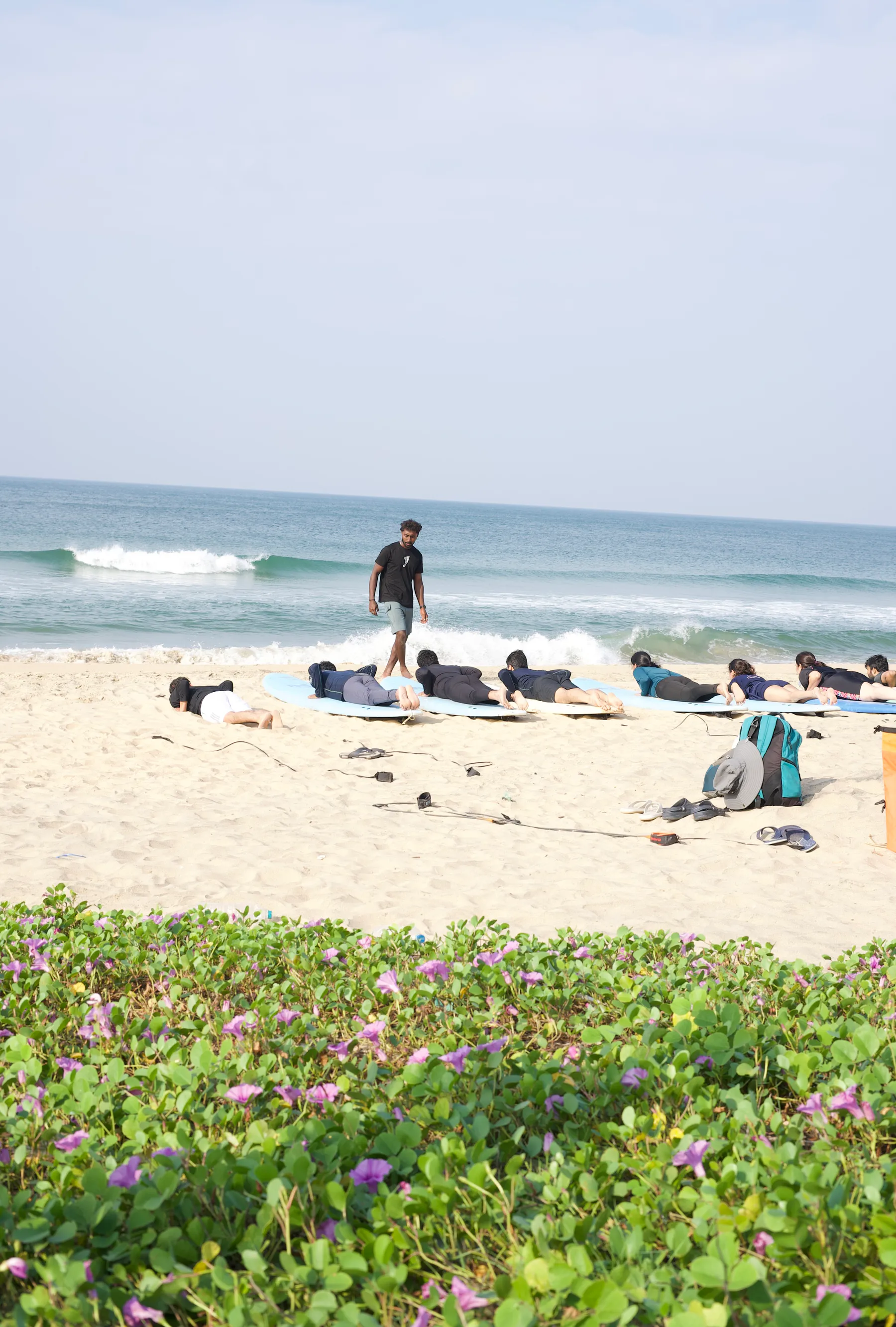
Your first surf lesson in Varkala starts before you pick up a board. Tell the team what you have tried, how comfortable you feel in the sea and when you are visiting. Those details help shape a sensible introduction. You do not need to arrive knowing surf terminology or having practised a perfect pop-up. You do need room in your plans for changing conditions, a clear understanding of the booking and a willingness to ask questions. This guide covers the conversation before your lesson, preparation on the day and what useful progress can look like when you are completely new.
Start with an honest conversation
Being new to surfing and being unable to swim are different things. Explain your swimming ability and any anxiety about open water before booking. An instructor must assess whether participation is appropriate for you and the conditions. A board, leash or lesson booking is not a guarantee of safety. If you cannot swim, do not assume a beginner session is suitable; discuss this explicitly and be prepared to postpone water participation.
Share anything that could affect taking part, including a relevant injury or limitation. Ask who will teach you, how many learners will be with that instructor and how the session is adapted for different abilities. A useful answer describes the actual arrangement for your date rather than promising everyone will stand up.
Confirm the practical details
Paddlecult offers beginner, private and group lessons, progression coaching and multi-session options. Choose the format that fits your experience, then agree a time with the surf team. A room reservation and a lesson booking are separate unless your package includes both.
Before paying, get the meeting point, reporting time and cancellation terms in writing. Clarify whether the quoted duration includes the beach briefing and preparation. Ask what happens if conditions make a session unsuitable: a different time, a changed format or cancellation may each have different terms.
- Which board and other equipment are included?
- Is transport included, and where do we meet?
- What should I wear and bring?
- When will the team confirm the conditions and final session time?
Prepare for the beach, then the water
Pack clothing that stays secure when wet, a towel, drinking water and a dry change of clothes. Ask the team about suitable sun protection and any clothing or equipment they supply. Keep valuables to a minimum and confirm where your bag can stay during the lesson. Leave enough time to find the meeting point without rushing.
Expect to spend time listening and practising on land. Paddlecult describes a first session as meeting the coach, understanding the beach, warming up, learning board movements and entering the water with guidance when appropriate. Ask for a demonstration again if an instruction is unclear. Understanding the agreed boundaries matters more than keeping up with another learner.
Let the conditions set the pace
The RNLI’s general surfing guidance emphasises checking weather and tides, knowing your limits and understanding rip currents. These principles are useful preparation, but its UK flag and rescue information is not a description of arrangements in Varkala. Ask your instructor to explain the local hazards, supervision, signals and emergency procedure at the beach being used.
During the briefing, make sure you understand where to enter and leave, how to handle your board around other people and how to tell the instructor you need a break. Do not move beyond the agreed area to chase a better wave. Tell the coach promptly if you feel tired, frightened or uncomfortable; changing the plan is part of responsible instruction.
Leave with a useful next step
A first lesson can involve repeated attempts, plenty of falling and time simply getting familiar with the board. Standing up is one possible moment, not a promised result or the only measure of learning. Ask what improved and what deserves attention next. A specific observation about positioning or listening to the briefing is more useful than comparing photographs.
Keep the rest of the day light enough to rest. If you want another session, discuss your experience with the team before committing to a package. Send your dates, number of learners and swimming confidence through the surf page so the conversation begins with the information that matters.
A couple of useful questions
Can I take a lesson if I cannot swim?
Do not assume a beginner lesson is suitable. Tell the team before booking; an instructor must assess suitability and may advise against entering the water.
Will I stand up in my first lesson?
There is no guaranteed outcome. Conditions, confidence and individual learning pace affect the session. Ask for feedback and an appropriate next step.